Social Security Is a Lie—and Here's the Math to Prove It
You paid in. You trusted the system. But the numbers don’t work—and by the time you retire, there may be nothing left.

Social Security Is a Lie—and Here's the Math to Prove It
Most Americans believe Social Security will be there when they retire.
They’re wrong.
The system isn’t just broken—it’s mathematically doomed. The government won’t tell you that. Politicians will dodge, deflect, and delay. But numbers don’t lie.
This article isn’t fearmongering. It’s arithmetic. And when you see the math, you’ll understand why Social Security is the biggest financial lie Washington still tells—and why you need to prepare for life without it.
The Promise vs. The Reality
The Promise:
You pay into Social Security your whole working life. When you retire, the government pays you back with interest in the form of monthly benefits.
The Reality:
The government didn’t save your money. It spent it.
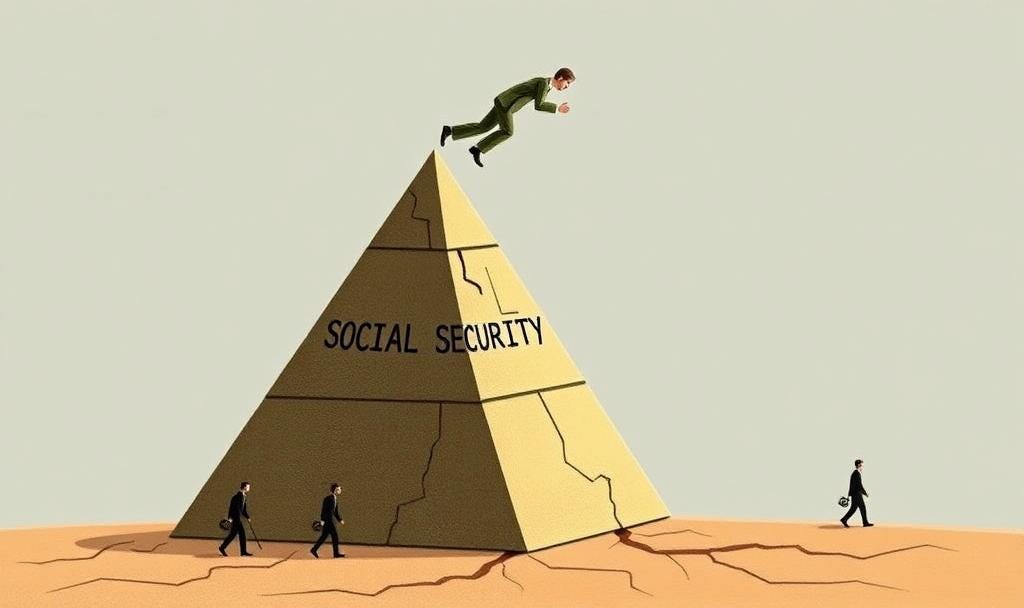
What you paid in was used to cover current retirees. Your future benefits depend entirely on younger workers funding the system when it’s your turn. It’s not an investment. It’s a transfer scheme—a political Ponzi scheme—and it’s running out of contributors.
The Core Problem: Demographics and Debt
Here’s the basic math:
When Social Security launched in 1935, there were 42 workers per retiree
Today, there are just over 2.7 workers per retiree
By the 2030s, that number drops closer to 2.3
Now factor in:
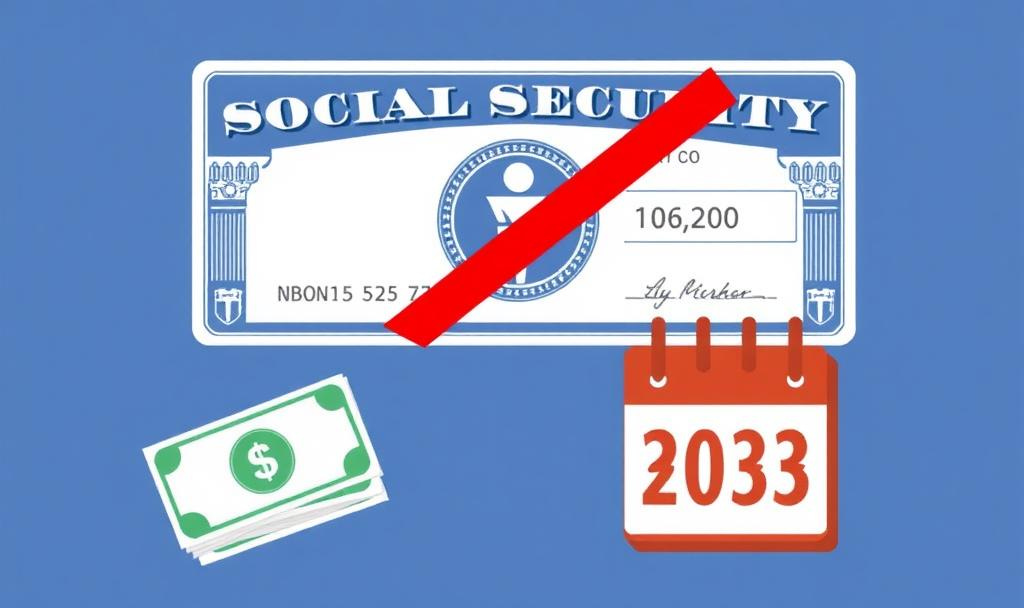
The Social Security trust fund will be depleted by 2033
At that point, benefits must be cut by ~23%, unless drastic changes are made
Life expectancy is higher, meaning people draw more benefits over time
Birth rates are lower, meaning fewer workers are paying in
This isn’t speculation—it’s built into the system. It’s already happening.
There Is No “Trust Fund” in Any Real Sense
You’ll hear politicians say “Social Security is fully funded until 2033.”
Let’s translate that:
The “trust fund” is filled with IOUs from the U.S. Treasury
There’s no cash—just promises from one arm of the government to another
Redeeming those IOUs means borrowing more money, raising taxes, or printing dollars
So even if the trust fund lasts until 2033, it’s still funded by you—not saved dollars.
Here’s What That Looks Like
Let’s say you made $60,000/year for most of your life. You and your employer paid 12.4% of that (combined) into Social Security.
That’s $7,440/year, for 40 years = $297,600 paid in.
Sounds decent, right?
Now consider:
That money wasn’t invested—it was spent
You may only receive it back if future workers pay in
If the system cuts benefits by 23%, your $1,500 monthly benefit becomes ~$1,150
Inflation erodes the purchasing power every year
If you live to 85, you’ll likely lose money on Social Security—while being taxed the entire time.
Why No One Will Fix It
To fix Social Security, the government would need to:
Raise the retirement age
Cut current or future benefits
Increase payroll taxes
Means-test payouts (i.e., deny benefits to “wealthier” seniors)
All of these are political suicide.
So instead, they lie:
“We’ll protect Social Security.”
“No one wants to touch your benefits.”
“The trust fund is solvent.”
Translation: They’re stalling—and they’re hoping you don’t notice.
What Happens When It Breaks
When the trust fund runs out and tax revenue can’t keep up:
Automatic benefit cuts hit across the board
Seniors panic, and political pressure explodes
Congress prints money to cover the gap, worsening inflation
Younger generations rebel, having paid into a system that betrayed them
The whole program destabilizes, likely leading to rushed, unfair reforms
This won’t happen decades from now. It happens in 2033—or sooner, if the economy stumbles.
What You Can Do Now
You can’t fix the system, but you can escape its collapse.
Here’s how:
Don’t count on Social Security in your retirement plan
Build independent income streams and savings
Diversify into real assets that hold value
Prepare for higher taxes and inflation
Wake up friends and family before the panic hits
Final Word
Social Security is not a retirement plan. It’s a government promise—one backed by unsustainable math and fading political will.
The lie isn’t just that it’s “secure.”
The lie is that you’ll be taken care of.
You won’t. Not by this system.
So start building your own.